
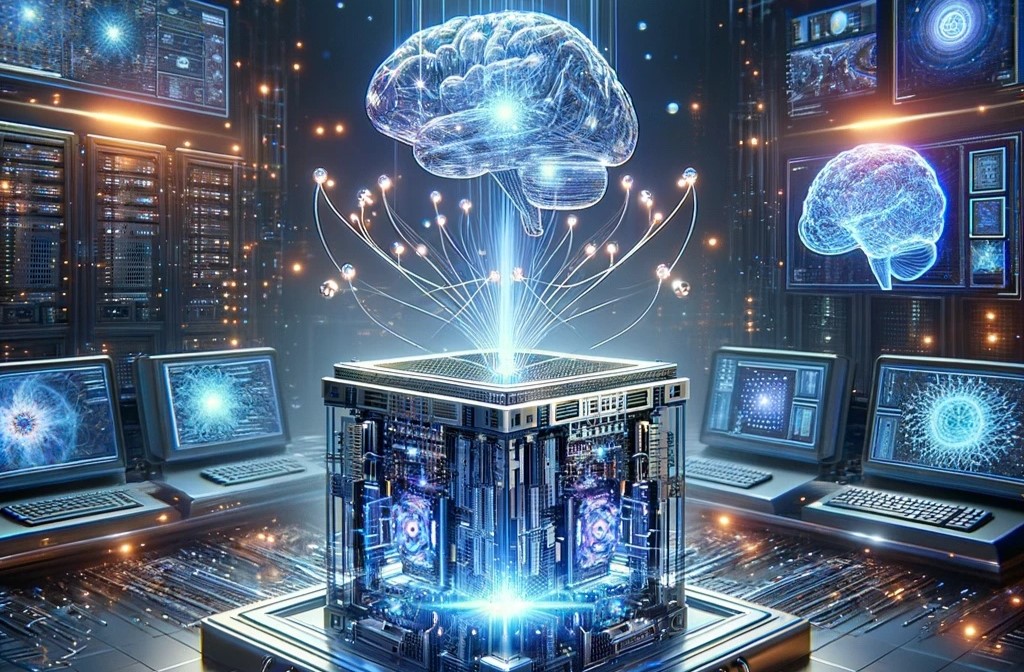
Quantum Computing and AI: Pioneering the Next Frontier of Technological Evolution

In the rapidly evolving landscape of technology, two cutting-edge fields stand poised to redefine the boundaries of what’s possible: Quantum Computing and Artificial Intelligence (AI). The fusion of quantum computing’s unparalleled processing capabilities with AI’s sophisticated algorithms promises a revolution in how we tackle complex problems. This article delves into the profound implications of this synergy, exploring the potential breakthroughs, the challenges of integration, and the future it heralds for technological advancement.

Unveiling Quantum Computing: A Primer

Quantum computing transcends traditional computation by leveraging the principles of quantum mechanics. Unlike classical computers, which process bits in a binary state of 0 or 1, quantum computers use quantum bits or qubits. Qubits can exist in a state of 0, 1, or both simultaneously, thanks to superposition. Moreover, through entanglement, the state of one qubit can depend on the state of another, no matter the distance separating them. This allows quantum computers to process vast amounts of information at speeds unattainable by their classical counterparts, opening new vistas in computation.

Quantum Computing Meets AI

The integration of quantum computing with AI signifies a leap toward solving complexities that are currently beyond reach. Quantum computing can significantly speed up the processing of complex algorithms, a boon for AI’s data-intensive tasks. This synergy could lead to the development of new types of machine learning models that can learn more efficiently, make more accurate predictions, and solve intricate problems in seconds—tasks that would take classical computers millennia to complete.

Potential Breakthroughs

  • Optimization: Quantum algorithms, such as the quantum approximate optimization algorithm (QAOA), could revolutionize fields that rely heavily on optimization problems, including logistics, finance, and energy distribution. Quantum computing could find the optimal solution in a fraction of the time it takes current technologies, dramatically improving efficiency and cost-effectiveness.
  • Simulation: Quantum computers can simulate complex quantum systems directly, a task that is incredibly resource-intensive on classical computers. This capability could accelerate drug discovery and material science research, enabling scientists to model molecular interactions with unprecedented accuracy and speed.
  • Cryptography: Quantum computing presents both an opportunity and a challenge in the field of cryptography. Quantum algorithms, like Shor’s algorithm, could break many of the cryptographic systems currently in use. This necessitates the development of quantum-resistant cryptography to secure our data in a post-quantum world.

Enabling New AI Paradigms

Quantum computing could enable AI to break through current limitations by providing the computational power needed for processing and analyzing the ever-growing datasets. Quantum-enhanced machine learning algorithms could improve learning efficiency, enable more sophisticated neural network models, and open the door to AI systems capable of complex reasoning and understanding.

The Challenges Ahead

Integrating quantum computing with AI technologies is not without its hurdles. Quantum computers are still in the nascent stages of development, with issues like qubit stability, error rates, and the need for extremely low operating temperatures. Moreover, developing quantum algorithms that can effectively leverage quantum computing’s capabilities for AI applications is a significant challenge, requiring advancements in both quantum theory and machine learning.

Another challenge lies in making quantum computing accessible to the broader AI research community. Currently, the use of quantum computers is limited to specialized research labs with the necessary expertise and resources. Bridging this gap is essential for the widespread adoption and integration of quantum computing in AI.

Looking Towards the Future

The intersection of quantum computing and AI holds the promise of ushering in a new era of technological advancement. As researchers overcome the challenges of integration, we stand on the brink of breakthroughs that could solve some of humanity’s most pressing problems, from climate change to curing diseases.

The road ahead is both exciting and uncertain, filled with potential and fraught with technical obstacles. Yet, the promise of quantum computing and AI together offers a glimpse into a future where the impossible becomes possible, heralding a new age of innovation and discovery. The synergy between these two fields could very well define the next frontier of technological evolution, transforming our world in ways we have yet to fully comprehend.

The Intersection of AI and Blockchain: Pioneering a New Technological Era

In the ever-evolving landscape of technology, two revolutionary forces have emerged as frontrunners in driving unprecedented change across industries: Artificial Intelligence (AI) and Blockchain. While each technology independently boasts transformative potential, its convergence is paving the way for a new era of innovation, security, and efficiency. This article delves deep into the intersection of AI and Blockchain, exploring the synergies that emerge from this fusion and the profound implications it holds for the future.

The Genesis of a Synergistic Relationship

At its core, AI involves the creation of intelligent machines that can simulate human thinking capabilities and autonomously perform tasks, learning from their experiences. Blockchain, on the other hand, is a decentralized ledger technology that ensures transparent, secure, and tamper-proof transactions. When these two technological titans converge, they create a symbiotic relationship that leverages the strengths of each to address their weaknesses.

Enhancing AI with Blockchain

Blockchain technology can significantly augment the capabilities of AI in several ways. Primarily, it offers a solution to one of AI’s most pressing challenges: the need for vast, reliable data. By providing a secure and immutable platform for data storage and sharing, blockchain ensures the integrity of the data used by AI systems for learning and decision-making. This not only improves the accuracy of AI algorithms but also enhances transparency in AI operations, making the decision-making process auditable and explainable.

Moreover, blockchain can democratize AI by creating decentralized marketplaces for data and AI algorithms. This allows smaller entities to access high-quality data and AI services, fostering innovation and competition in the AI space. Additionally, blockchain’s smart contracts can automate the execution of AI tasks, ensuring trust and reliability in AI-driven processes.

Empowering Blockchain with AI

Conversely, AI can significantly enhance the functionality of blockchain. One of the key contributions of AI to blockchain is in optimizing consensus mechanisms, which are crucial for validating transactions. AI algorithms can predict the most efficient consensus mechanism based on the network’s current state, reducing processing time and energy consumption.

AI can also address blockchain’s scalability issues by intelligently managing data and identifying the most relevant information to be stored on-chain while offloading less critical data. Furthermore, AI-driven analysis of blockchain data can uncover insights into user behavior, detect fraudulent activities, and enhance security measures.

Real-World Applications: A Glimpse into the Future

  • Healthcare: Securely sharing patient data across institutions for research, diagnosis, and treatment, ensuring privacy and data integrity.
  • Finance: Enhancing security in transactions, automating regulatory compliance, and providing personalized financial services through AI-driven insights.
  • Supply Chain Management: Ensuring transparency and traceability of goods, from production to delivery, while optimizing logistics through AI.
  • Smart Cities: Creating decentralized, intelligent urban management systems that ensure privacy, security, and efficiency in public services.

Challenges and Considerations

Despite the promising synergy between AI and Blockchain, there are challenges to navigate. These include the computational demands of running complex AI algorithms on blockchain platforms, ensuring the privacy of sensitive data while maintaining transparency, and addressing ethical considerations around autonomous AI decisions.

The intersection of AI and Blockchain represents a frontier of technological innovation with the potential to redefine industries, enhance security and transparency, and democratize access to advanced technologies. As we venture further into this exciting confluence, it is crucial to address the accompanying challenges through collaborative research, ethical considerations, and regulatory frameworks. The journey towards a more secure, efficient, and equitable technological future is just beginning, and the fusion of AI and Blockchain is leading the way.

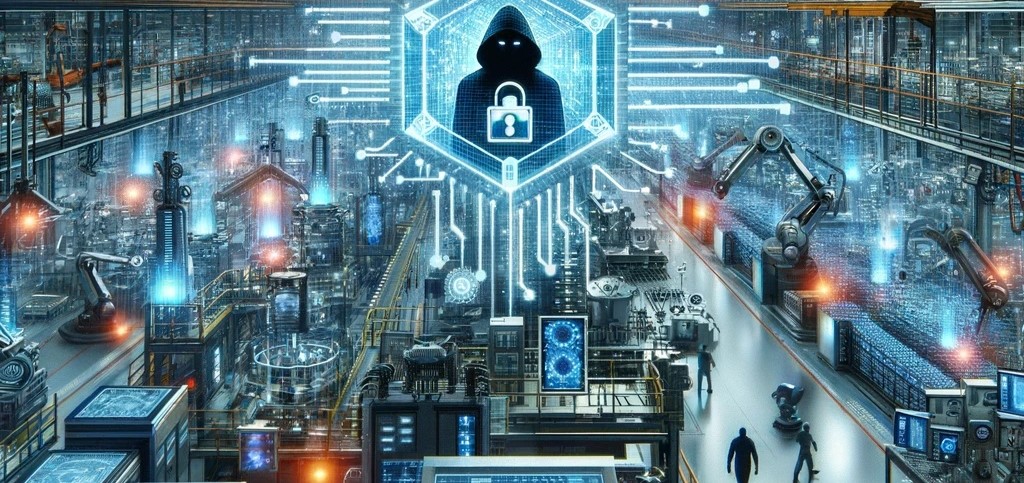
Cybersecurity Challenges and Strategies in the Digital Manufacturing Era

In an era where the manufacturing sector increasingly embraces digitization and interconnectivity, a new breed of challenges emerges, prominently featuring cybersecurity threats. The digital transformation, while driving efficiency, scalability, and innovation, has concurrently opened the floodgates to a plethora of cyber risks, ranging from data breaches to full-fledged cyberattacks that can paralyze production lines, compromise intellectual property (IP), and jeopardize customer data. With the advent of artificial intelligence (AI), the landscape of these threats is becoming even more complex and formidable.

The Growing Risk Landscape

As factories integrate more deeply with the Internet of Things (IoT), cloud computing, AI, and other digital technologies, the attack surface widens. Cybercriminals, spotting the opportunity, have become more sophisticated, employing AI and machine learning to launch targeted attacks that exploit the specific vulnerabilities of interconnected manufacturing systems. These AI-powered attacks can adapt in real-time, evading detection with unprecedented efficiency. Meanwhile, insider threats also pose a significant risk, whether through malice or negligence, further complicating the cybersecurity challenge.

AI: A Double-Edged Sword

The integration of AI into cybercriminal activities marks a significant evolution in the threat landscape. AI algorithms can analyze vast amounts of data from various breaches to identify patterns and vulnerabilities much faster than human hackers. This capability enables cybercriminals to craft highly targeted phishing campaigns, automate the discovery of new exploits, and even use AI to control malware and ransomware in more sophisticated, adaptive ways.

Conversely, AI also holds the promise of bolstering cybersecurity defenses. Advanced anomaly detection systems powered by AI can monitor network traffic and identify suspicious activities that deviate from the norm, often catching breaches before they can cause significant damage. Furthermore, AI can automate routine security tasks, freeing up human security experts to tackle more complex challenges.

The Potential Consequences

The stakes are significantly raised with AI in the arsenal of cybercriminals. A successful cyberattack can now be more devastating, with AI-enhanced malware spreading faster and hiding more effectively from traditional cybersecurity measures. The theft of IP, facilitated by AI’s ability to sift through and interpret vast datasets, can give competitors or nation-states an unwarranted edge, eroding competitive advantages built over years. Moreover, breaches involving customer data can erode trust, leading to long-term reputational damage and legal repercussions.

A Blueprint for Cyber Resilience

  • Enhanced Cybersecurity Awareness: The importance of cybersecurity awareness becomes even more critical in the age of AI. Training must evolve to include awareness of AI-specific threats and how AI can be leveraged by both attackers and defenders.
  • Adopting AI in Defense: Proactively incorporating AI into cybersecurity strategies can help in early detection and response to AI-powered threats. AI can analyze patterns and predict potential attacks before they happen, providing a crucial advantage in the cybersecurity arms race.
  • Robust Incident Response Planning: AI can also play a role in incident response, helping to quickly analyze the scope of a breach and automate certain response protocols, thereby reducing the time to resolution.
  • Collaboration and AI Ethics: As AI technologies become more integrated into cybersecurity, ethical considerations and collaborative efforts in AI development and regulation become paramount. Sharing AI threat intelligence and best practices can help elevate the overall security posture of the manufacturing sector against AI-powered threats.

Looking Ahead

The digital transformation of manufacturing, coupled with the rise of AI, presents a dual-edged scenario: vast opportunities for growth and innovation, alongside significant cybersecurity risks. Manufacturers must navigate this new frontier with vigilance, leveraging AI not only to drive business forward but also to fortify defenses against increasingly sophisticated cyber threats. The future of manufacturing in the digital age depends not just on embracing technology, but also on ensuring that technology is secure, resilient, and trustworthy.

Revolutionizing Quality Control and Maintenance with Artificial Intelligence

In the fast-paced world of manufacturing and production, ensuring product quality and equipment reliability are paramount. However, traditional quality control and maintenance methods often fall short in detecting defects early or predicting equipment failures before they occur. Enter artificial intelligence (AI), a game-changer revolutionizing these critical processes through predictive maintenance algorithms and AI-powered quality control systems.

Gone are the days of reactive maintenance practices where equipment is repaired or replaced only after a breakdown occurs, leading to costly downtime and production losses. AI-driven predictive maintenance takes a proactive approach by analyzing real-time data from sensors, equipment logs, and historical maintenance records to forecast when equipment is likely to fail. By identifying potential issues in advance, maintenance can be scheduled during planned downtime, maximizing productivity and minimizing disruptions.

Moreover, AI-powered quality control systems have transformed the way defects are detected and addressed in manufacturing processes. Traditional quality control methods often rely on manual inspection, which is time-consuming, subjective, and prone to human error. In contrast, AI algorithms can analyze vast amounts of data from sensors, cameras, and production systems in real-time to detect even the smallest deviations from desired quality standards.

One of the key advantages of AI-powered quality control systems is their ability to adapt and learn over time. Machine learning algorithms can continuously improve their accuracy by analyzing feedback from previous inspections and adjusting detection criteria accordingly. This iterative process not only enhances the effectiveness of quality control but also enables manufacturers to identify and address root causes of defects, leading to long-term improvements in product quality.

Furthermore, AI-powered quality control systems can be integrated seamlessly into existing production lines, complementing human inspectors rather than replacing them. By automating repetitive and labor-intensive tasks, such as visual inspection and defect classification, AI frees up human workers to focus on more complex and value-added activities, such as process optimization and problem-solving.

The benefits of implementing AI-powered quality control and predictive maintenance are far-reaching. Beyond reducing downtime and improving product quality, these technologies also have significant implications for cost savings, resource efficiency, and customer satisfaction. Manufacturers can optimize their maintenance schedules, minimize inventory holding costs for spare parts, and deliver products that meet or exceed customer expectations consistently.

However, the adoption of AI in quality control and maintenance is not without its challenges. Data privacy and security concerns, the need for specialized technical expertise, and the upfront investment in infrastructure and training are among the factors that companies must consider. Additionally, cultural barriers and resistance to change within organizations can hinder the successful implementation of AI technologies.

Nevertheless, the potential benefits outweigh the challenges, making AI-powered quality control and predictive maintenance an indispensable tool for manufacturers looking to stay competitive in today’s rapidly evolving marketplace. By harnessing the power of AI to optimize equipment performance, detect defects early, and improve product quality, manufacturers can enhance their operational efficiency, drive innovation, and deliver value to customers like never before.

The era of AI-powered quality control and predictive maintenance represents a transformative shift in the manufacturing industry, unlocking new possibilities for efficiency, reliability, and quality. As technology continues to advance and AI capabilities evolve, manufacturers must embrace these innovations to thrive in an increasingly competitive global landscape. The future of manufacturing is here, and it’s powered by artificial intelligence.

AI for Good: Leveraging its Power for Positive Social Impact

In the era of rapid technological advancement, artificial intelligence (AI) stands out as a beacon of potential for fostering significant social and environmental change. Its capabilities, from machine learning to natural language processing, offer unprecedented opportunities to address some of the most pressing challenges facing humanity today. From enhancing healthcare access and promoting education equity to mitigating climate change, AI has the power to catalyze positive transformations across the globe. However, harnessing this potential requires careful consideration of the ethical implications to ensure that the benefits of AI are accessible to all members of society and that its deployment promotes responsible growth and development.

Healthcare Access: Bridging the Gap with AI

In the healthcare sector, AI technologies are revolutionizing the way medical services are delivered and accessed. Telemedicine, powered by AI, is making healthcare more accessible in remote and underserved regions, where traditional medical infrastructure is limited or non-existent. AI-driven diagnostic tools, such as those that analyze images for signs of diseases like cancer or diabetic retinopathy, are improving the accuracy and speed of diagnoses, often with greater efficiency than human counterparts. For instance, Google Health’s DeepMind developed an AI system that can identify more than 50 eye diseases from 3D scans, promising faster and more accurate diagnoses for millions worldwide. These advancements not only increase access to healthcare but also reduce the burden on healthcare systems, making them more sustainable in the long run.

Education Equity: AI as a Catalyst for Inclusive Learning

The education sector is witnessing a transformative shift with AI’s integration into learning environments. AI-powered educational platforms are tailoring learning experiences to individual needs, enabling personalized learning pathways that can help bridge the achievement gaps. Tools like Carnegie Learning and Content Technologies, Inc., employ AI to adapt material to suit the learning pace and style of each student, thus promoting equity in education. Furthermore, AI is facilitating language learning and literacy through applications that provide real-time feedback and support, making education more accessible to non-native speakers and learners with disabilities. By democratizing access to quality education, AI is leveling the playing field for students from diverse backgrounds.

Climate Change Mitigation: AI’s Role in a Sustainable Future

AI’s potential to combat climate change is both vast and vital. Through data analysis and predictive modeling, AI is enhancing our understanding of climate patterns and the impact of human activities on the environment. AI-driven technologies are optimizing energy consumption in homes, businesses, and cities, contributing to significant reductions in carbon footprints. For example, Google’s AI-powered efficiency recommendation systems for data centers reduce energy use for cooling by up to 40%, demonstrating substantial environmental benefits. Furthermore, AI is instrumental in advancing renewable energy technologies by improving the efficiency of solar panels and wind turbines, making sustainable energy sources more viable and accessible.

Ethical Considerations: Ensuring AI Benefits All

As we embrace AI’s potential to drive social and environmental progress, it is imperative to address the ethical challenges that accompany its development and deployment. Ensuring data privacy, preventing bias, and promoting inclusivity are paramount to harnessing AI for good. AI systems must be designed and trained using diverse datasets to prevent perpetuating existing inequalities. Moreover, transparency in AI algorithms and decision-making processes is crucial to building trust and accountability.

Collaboration among governments, private sectors, and civil society is essential to develop guidelines and frameworks that govern AI use, ensuring it aligns with societal values and ethical principles. By fostering an inclusive dialogue that involves diverse stakeholders, we can navigate the complexities of AI deployment to maximize its benefits while minimizing risks.

AI offers a promising avenue for addressing some of the most critical social and environmental challenges of our time. By leveraging its power for healthcare access, education equity, and climate change mitigation, we can usher in a new era of positive social impact. However, realizing this potential requires a concerted effort to navigate the ethical considerations involved, ensuring AI’s benefits are equitably distributed. Through responsible development and deployment, AI can be a powerful ally in our quest for a more just, sustainable, and prosperous world for all.