The Spy Game: Unmasking Hidden Vulnerabilities in Your Supply Chain

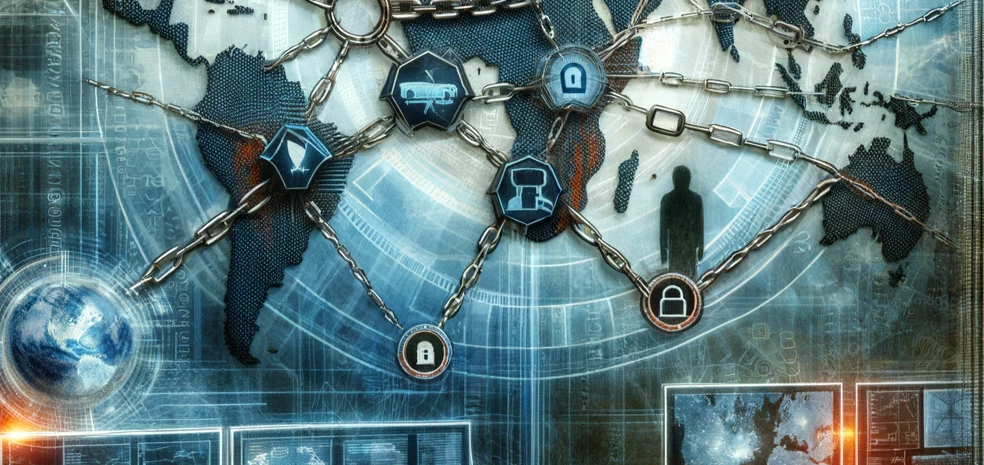
In an increasingly interconnected world, the supply chain is the lifeblood of commerce, intricately linking various global entities in a complex web of transactions and exchanges. Yet, beneath the surface of this bustling trade network lies a dark underbelly, often obscured from the public eye. This article delves into the hidden vulnerabilities of international trade, highlighting the risks associated with cyberattacks, counterfeiting, and human trafficking within supply chains, and provides insights into real-world examples of these threats and the strategies used to mitigate them.

Cybersecurity: The Invisible Threat

Cybersecurity is a critical concern in supply chain management. As companies increasingly rely on digital systems to manage their supply chains, they become vulnerable to cyberattacks. These attacks can range from data breaches to ransomware, causing significant financial loss and damage to a company’s reputation.

A notable example of this was the 2017 NotPetya cyberattack, which caused havoc across multiple global companies. Shipping giant Maersk was one of the worst affected, with the attack crippling its IT systems and leading to an estimated loss of $300 million. This incident highlights the need for robust cybersecurity measures in the supply chain.

To combat such threats, companies are now investing in advanced cybersecurity technologies, including blockchain and AI-driven security systems. These technologies help in monitoring supply chain operations in real-time, detecting anomalies, and preventing unauthorized access to sensitive data.

Counterfeiting: Eroding Brand Value and Consumer Trust

Counterfeiting is another significant threat to supply chains. It not only erodes brand value but also poses serious risks to consumer safety. The pharmaceutical industry, for instance, has been battling the scourge of counterfeit drugs, which can have deadly consequences.

In response, companies are employing sophisticated tracking and authentication technologies. For example, RFID tags and blockchain technology are being used to track the journey of products from manufacture to sale, ensuring authenticity. In 2020, a luxury fashion brand implemented an AI-based system to trace the origin of raw materials used in their products, significantly reducing the incidence of counterfeit goods in their supply chain.

Human Trafficking: The Ethical Blind Spot

Human trafficking in supply chains represents a grave ethical issue. It often goes unnoticed, as victims are hidden within the layers of subcontracting in global trade. The electronics and clothing industries, in particular, have been criticized for labor abuses in their supply chains.

To address this, some companies have started conducting thorough audits of their suppliers, ensuring compliance with labor laws and ethical standards. For instance, a leading tech company published its Supplier Responsibility Report, revealing the steps taken to eliminate forced labor from its supply chain, including the termination of contracts with suppliers found violating labor laws.

Successful Mitigation Strategies

The fight against these hidden vulnerabilities requires a multifaceted approach. Companies are now adopting more transparent and ethical supply chain practices. They are investing in technology to gain better visibility and control over their supply chains. Collaborative efforts, like information sharing and joint initiatives between businesses and governments, are also vital in combating these risks.

For example, the Global Cyber Alliance, an international, cross-sector effort, has been instrumental in developing tools and strategies to prevent cyber threats in supply chains. Similarly, the Fashion Revolution movement works towards greater transparency in the fashion industry, encouraging brands to disclose information about their supply chains.

The complexities of modern supply chains expose them to various hidden vulnerabilities. While the risks of cyberattacks, counterfeiting, and human trafficking are significant, there is a growing awareness and proactive effort among companies to address these issues. Through technological innovation, ethical practices, and collaborative efforts, the dark underbelly of international trade is gradually being brought to light, making supply chains not only more secure but also more humane and responsible.


Geopolitical Tug-of-War: Navigating the Evolving Landscape of Global Supply Chains

The complexities of managing global supply chains have intensified in recent years. While traditional concerns like weather and logistics remain, geopolitical factors are increasingly adding layers of uncertainty. From trade tensions to regional conflicts, these dynamics can disrupt established routes, cause delays, and impact costs. However, proactive strategies can help businesses navigate these ever-evolving waters and ensure smooth operations.

Trade Landscape in Transition

Once-seamless trade flows now face challenges. The ongoing US-China trade dispute, for example, continues to impact established supply chains. Businesses are adapting by exploring alternative sourcing options and diversifying their partnerships. Similar trade concerns exist in other regions, further highlighting the need for flexibility and adaptability.

Regional Realities and Their Ripple Effects

Beyond trade, regional conflicts create additional challenges. The ongoing war in Ukraine, for instance, has significantly impacted global energy markets and transportation costs. Tensions in other regions, like the Middle East and South China Sea, can also disrupt crucial shipping lanes. In today’s interconnected world, these situations have far-reaching consequences, even for seemingly distant businesses.

Building Resilience in a Connected World

Despite these challenges, strategies can help businesses build resilience. Diversification of sourcing, transportation routes, and production locations is key to mitigating risk from any single geopolitical hotspot. Agility, achieved through flexible logistics solutions and strong relationships with alternative suppliers, allows for quick adaptation to changing circumstances. Transparency and clear communication with suppliers, customers, and partners help everyone prepare and respond effectively. Finally, collaboration with other businesses, industry associations, and even governments can provide valuable resources, information, and best practices for navigating complex geopolitical landscapes.

While the global landscape may be evolving, proactive planning, strategic diversification, and a collaborative spirit can empower businesses to navigate these challenges and ensure their supply chains remain vital engines of global trade and prosperity. After all, even the most turbulent seas eventually calm, and through collective effort, we can ensure our ships continue to deliver the goods that keep the world moving.

Supply Chains for Services: How can service-based industries apply supply chain principles to improve efficiency and customer satisfaction?

Supply chains, traditionally associated with manufacturing and distribution, are a crucial aspect of modern business practices. However, the concept of supply chains can also be applied to service-based industries, albeit in a more abstract form. Implementing supply chain principles in service industries can lead to significant improvements in efficiency and customer satisfaction.

Understanding the Service Supply Chain

The service supply chain is fundamentally different from the traditional supply chain in that it deals with intangible products. This means focusing on the flow of information, customer interactions, and the delivery of services rather than the movement of physical goods. However, the principles of supply chain management—such as streamlining processes, managing demand, and optimizing inventory (in this case, human resources or time)—remain relevant.

Streamlining Processes

Efficiency in service delivery is often hampered by bureaucratic processes and unnecessary steps. By applying supply chain principles, services can be streamlined. This involves mapping out the service process, identifying bottlenecks, and eliminating redundant steps. For example, in healthcare, this might mean simplifying patient admission procedures or integrating electronic health records to reduce waiting times and improve patient care.

Demand Management

Just as traditional supply chains must manage and forecast product demand, service industries must predict and manage the demand for their services. This involves understanding customer needs and expectations, which can be achieved through market research and data analysis. For instance, a hotel chain might use historical data to predict peak occupancy periods and adjust staffing levels accordingly.

Resource Optimization

In service industries, resources typically include human talent and time. Optimizing these resources is key to improving efficiency. This could mean better scheduling, training staff to multitask, or employing technology to automate certain tasks, allowing human resources to be focused where they are most needed.

Leveraging Technology

Technology plays a pivotal role in modernizing service supply chains. From customer relationship management (CRM) systems to artificial intelligence and machine learning, these tools can enhance customer service, streamline processes, and provide valuable insights into customer behavior and preferences.

Customer-Centric Approach

The ultimate goal of applying supply chain principles in service industries is to enhance customer satisfaction. This means not only delivering services efficiently but also personalizing experiences and anticipating customer needs. For example, banks can use customer data to offer personalized financial advice or anticipate loan requirements.

Continuous Improvement

Finally, continuous improvement, a core principle of supply chain management, is vital. This involves regularly evaluating service delivery processes, seeking customer feedback, and staying abreast of new technologies and methods to enhance efficiency and customer satisfaction.

By applying supply chain principles, service-based industries can significantly improve their efficiency and customer satisfaction. The key lies in adapting these principles to the unique challenges and nature of services, focusing on streamlining processes, managing demand, optimizing resources, leveraging technology, and maintaining a customer-centric approach. Continuous improvement and adaptation to changing market conditions and technologies will be crucial for these industries to thrive in the competitive landscape.

Collaborative Synergy: The Untapped Potential in Supply Chains

In a world where businesses are often islands unto themselves, IDM Products dares to envision a future where the supply chain becomes a nexus of collaborative synergy. This isn’t just about partnerships or alliances; it’s about reimagining the very DNA of supply chains. We’re delving into the untapped potential of a collective approach, one that challenges conventional wisdom and encourages our readers to think beyond the norm.

The Emergence of Coopetition

Imagine a scenario where companies, traditionally competitors, engage in ‘coopetition’ – a blend of competition and cooperation. This radical idea goes beyond mere collaboration; it involves direct competitors sharing resources in areas that are not their core competitive advantage, thus creating shared value. Imagine your company collaborating with your competitors to pool logistical resources in remote areas, reduce costs, and increase efficiency without diluting brand value or competitive edge.

Decentralized Supply Chain Networks

Blockchain technology offers a compelling glimpse into decentralized supply chains. Instead of a single entity controlling the chain, imagine a distributed ledger system where every participant has equal control and visibility. This transparency revolutionizes trust in the supply chain, drastically reducing disputes and inefficiencies. By adopting this model, companies can shift from a hierarchical structure to a decentralized network, fostering resilience and agility.

AI-Driven Predictive Collaboration

The future of supply chain collaboration lies in predictive analytics powered by AI. By collectively harnessing AI, companies can predict market trends, consumer behavior, and supply chain disruptions with astonishing accuracy. This shared intelligence enables a proactive rather than reactive approach, optimizing the entire supply chain ecosystem. What if your company could predict a spike in demand in one region and collaboratively adjust with suppliers and logistics providers in real-time?

Sustainable Supply Ecosystems

Sustainability is no longer just an individual company’s concern; it’s a collective responsibility. We envision a supply chain that acts as an ecosystem, where waste from one process becomes the raw material for another. This circular supply chain, rooted in principles of the circular economy, not only minimizes waste and environmental impact but also opens doors to innovative business models and revenue streams.

Hyper-Customization Through Collaboration

The era of mass production is giving way to mass customization. Collaborative supply chains can uniquely cater to this shift. By integrating customer data across the chain, companies can produce highly customized products without sacrificing efficiency. Imagine a supply chain so responsive that your company can customize products on a large scale, tailored to individual consumer preferences, almost as easily as mass-produced items.

Challenge to Our Readers

We invite you, our esteemed readers, to join us in rethinking the supply chain. How can your organization contribute to and benefit from these collaborative models? Are there areas where you can pioneer coopetition, decentralization, AI integration, sustainable practices, or hyper-customization? The future of supply chains is not just about adapting to changes; it’s about being the catalyst for this transformation.

This exploration into collaborative supply chains is more than a theoretical exercise; it’s a call to action. At IDM Products, we believe in the power of collective innovation and responsibility. By embracing these novel ideas, we would not just be improving our supply chains; we would be reshaping the very landscape of business. Join us in this exciting journey towards a future where collaboration is the cornerstone of success and sustainability.